

The truth about testosterone and fatherhood
How men's testosterone changes when they become parents

This piece, an adapted excerpt from my book, DAD BRAIN, appeared as a commentary on the American Institute for Boys and Men’s website today. I’m a huge fan of Richard V Reeves and the work that AIBM has been doing to advocate for the interests of men.
I’ll also be doing a couple of fun Substack Lives next week: I’ll be chatting with Gary Barker of the incredible organization Equimundo on Tuesday, July 14, at 12pm EST/9am PST, and with Richard Reeves himself on Weds, July 15, at 1:30pm EST/10:30am PST. Come join us!
It seems like everyone these days, from politicians to wellness influencers, is talking about testosterone. Texas Senate candidate Ken Paxton is calling his opponent “Low-T Talarico.” Robert F. Kennedy boasts about his testosterone replacement therapy (TRT) regime. Testosterone supplement advertisements have become inescapable on many men’s social media feeds. If you are a man of a certain age who follows sports or fitness, the algorithm assumes you want more testosterone coursing through your veins. A recent New York Times Magazine cover story, “The Testosterone Moment is Here,” noted that 12 million prescriptions for testosterone were issued in 2025, many to young men without notably low levels.
As our understanding of masculinity has changed over the last century, worrying about the state of men’s T has become a way to raise alarm about threats to traditional masculinity ideals. Tucker Carlson devoted an entire Fox News series to what he described as a “total collapse of testosterone levels in American men.” Describing the aesthetic of this series, a journalist wrote, “One shot in particular stands out: a naked man atop a rock pile, limbs outflung, exposing his genitals to the red light issuing from what appears to be a waist-high air purifier.” The “air purifier” in question is a red-light device that Carlson markets to his fans as testosterone boosting, despite little evidence of its efficacy.
Carlson’s claims about collapsing testosterone levels strain under scrutiny, too. Although a handful of studies indicate that population-wide testosterone levels have declined over the last few decades, it’s by a few percentage points, not a total plummet. An increase in rates of obesity (which dampens testosterone) and a decrease in cigarette smoking (which increases it) explains much of the change, along with the effects of pollution and plastics.
Ultimately, Carlson and other testosterone-obsessed influencers may be missing the mark on men’s hormones. Good health is not just about high or low T; it’s about the body’s flexibility to respond to life’s changing demands.
When I was researching my new book, “Dad Brain: The New Science of Fatherhood and How it Shapes Men’s Lives”, I talked to Lee Gettler, a researcher at the University of Notre Dame who has conducted some of the best longitudinal studies of testosterone and fatherhood. Not only has he looked at large population-level studies of men before and after they become dads, but he has also tracked his own T levels around the births of his two children. He has found decreases in men’s testosterone around their transition to fatherhood that track with the amount of hands-on caregiving they do. These patterns emerge not just in human men, but also biparental birds, rodents, and primates.
Gettler sees these testosterone changes as adaptive, tied to reproductive strategy: You want high T when your goal is to find a mate and spread your seed as widely as possible. Once you’ve accomplished that goal and it’s time to focus on rearing your offspring, those high testosterone levels no longer serve you well. In fact, high T levels carry immunological costs for your body.
Hormone and brain changes in new dads show us that men come with bodies that respond to infant cues and parenting practice. Tweaking testosterone in new dads may undermine their adaptation to a life stage that is supposed to be transformative. High T is great in situations that call for it, but not in perpetuity, and especially not when a new baby needs your attention.
Different dads, different T
In addition to his research in the Philippines, Lee Gettler has done fascinating work in the Congo that illustrates how fathers vary. He and his collaborators measured men’s testosterone levels within the BaYaka, an egalitarian foraging community in the Congo Basin.
Much like their close cultural neighbors, the Aka, the BaYaka are hands-on fathers in a culture that values touch and connection. When you ask the BaYaka what makes a man a good dad, they mention not just caring for kids, but also a willingness to share resources with other people in the community. The men widely regarded as the best fathers also have the lowest testosterone. “This reflects their overall cultural ethos,” Gettler tells me.
The low-T BaYaka men most often flagged as good dads tend to have more children, which tells us that their lower T isn’t keeping them from mating success. That’s likely because, as Gettler says, marriages are fairly stable in the BaYaka community, so “good fathers” have multiple kids with the same partner. Men with lower testosterone have fewer relationship conflicts, form better-quality marriages, and build stronger families.
On the flip side, the neighboring Bandongo community, a fishing and farming society, has a different cultural model. Gettler tells me that “men are not really involved in hands-on care with little kids.” Fathers do spend time with teens to teach them how to fish, farm, hunt, and clear farming plots in the forest, a dangerous slash-and-burn enterprise. Within the community, which Gettler describes as “very patriarchal, very competitive, very hierarchical,” the best-rated dads have the highest testosterone levels. Gettler thinks that’s because men must engage in risky physical work to acquire resources and provide for their families, so competition and paternal investment go hand in hand.
Gettler says that this work has given him a more expansive understanding of what it means to be a good dad. Both the BaYaka and the Bandango fathers invest in their children and provide them with what they need to survive, but what children need varies based on their local ecological niche. Gettler thinks contemporary industrialized societies are in transition between what he calls the “high-T” and “low-T” models of fatherhood. “A few generations ago, there was a cultural narrative that dads should just be providers, and are not very capable parents otherwise.” But as the breadwinner-carer divide wanes, expectations about dads and caregiving are shifting. Most jobs no longer require high upper body strength or high risk tolerance, and so strict economic specialization no longer serves families well. By the same token, strict specialization of caregiving is no longer needed either. Gettler sees this as a positive adaptation. “There are lots of benefits for kids and families when societies adopt the lower-T model of fatherhood where dads are sensitive, nurturing, and involved with childcare.” And when fathers’ roles change, he thinks, their testosterone levels will follow suit.
However the parenting context shapes men’s testosterone levels, the bottom line is that, as Gettler says, “research on the biology of fatherhood tells us that men have the capacity for caregiving.”
Both high and low testosterone can pose problems for men. My lab has found a U-shaped relationship between testosterone and men’s depression in the first year after the birth of a child, such that men with midrange testosterone levels had the lowest risk. Perhaps new dads with low T feel more depleted, whereas dads with high T have more difficulty adjusting to parenthood and investing in their partner relationship, which then causes downstream mental health problems. There’s evidence that when men form stable partnerships, T naturally decreases, and men’s mortality drops as well: men take fewer risks and are less likely to abuse drugs and alcohol. For most men, the testosterone lesson is that it’s good to wind up in the middle of the pack. A mild drop in testosterone might be healthy for men becoming partners and fathers, as long as their levels don’t plunge too far.
The primatologist Robert Sapolsky, who has studied hormones and social hierarchies in baboons, offers similar advice about successful aging in his excellent book, “Why Zebras Don’t Get Ulcers.” If you’re a baboon, it sucks to be at the very bottom of the dominance hierarchy, at risk of getting kicked out of your troop. But it’s no fun to be at the very top, either. Young upstarts are always jockeying for position and trying to steal your spot. The happiest baboons, Sapolsky writes, are the chill ones who spend their time “affiliated with females, grooming, sitting in contact, and playing with kids.” They don’t get hassled by troop leaders, and they enjoy a satisfying old age. In human men, that might translate into midrange testosterone levels that can adapt flexibly to changing life circumstances.
Our superpower as humans is that we’re adaptable, able to change our behaviors in the face of different environmental demands. That’s what makes our species so resilient, able to survive in all kinds of climates and terrains. That adaptability is reflected in our testosterone, which changes across our lifespan as our reproductive strategies shift. Although high testosterone has its benefits, high T in perpetuity may not serve all of our evolutionary goals, including the goal of rearing thriving children. When it comes to masculinity, being a great dad might be more meaningful than maxing out your testosterone.
Copyright © 2026 by Darby Saxbe. Reprinted with permission from Flatiron Books. All rights reserved.
This fact from your post should be shouted from the rooftops:
"Hormone and brain changes in new dads show us that men come with bodies that respond to infant cues and parenting practice. Tweaking testosterone in new dads may undermine their adaptation to a life stage that is supposed to be transformative. High T is great in situations that call for it, but not in perpetuity, and especially not when a new baby needs your attention."
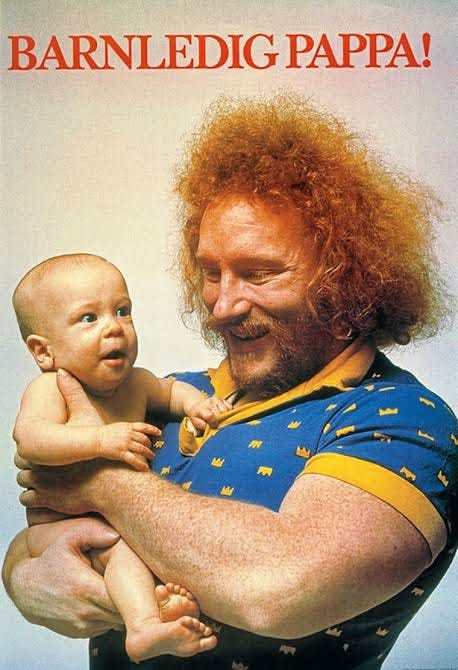
Haha the Swedish public announcement ad encouraging dads to take paternity leave was me!
Posted about it here: https://substack.com/@arianahendrix/note/c-222881255?r=diyl&utm_medium=ios&utm_source=notes-share-action